
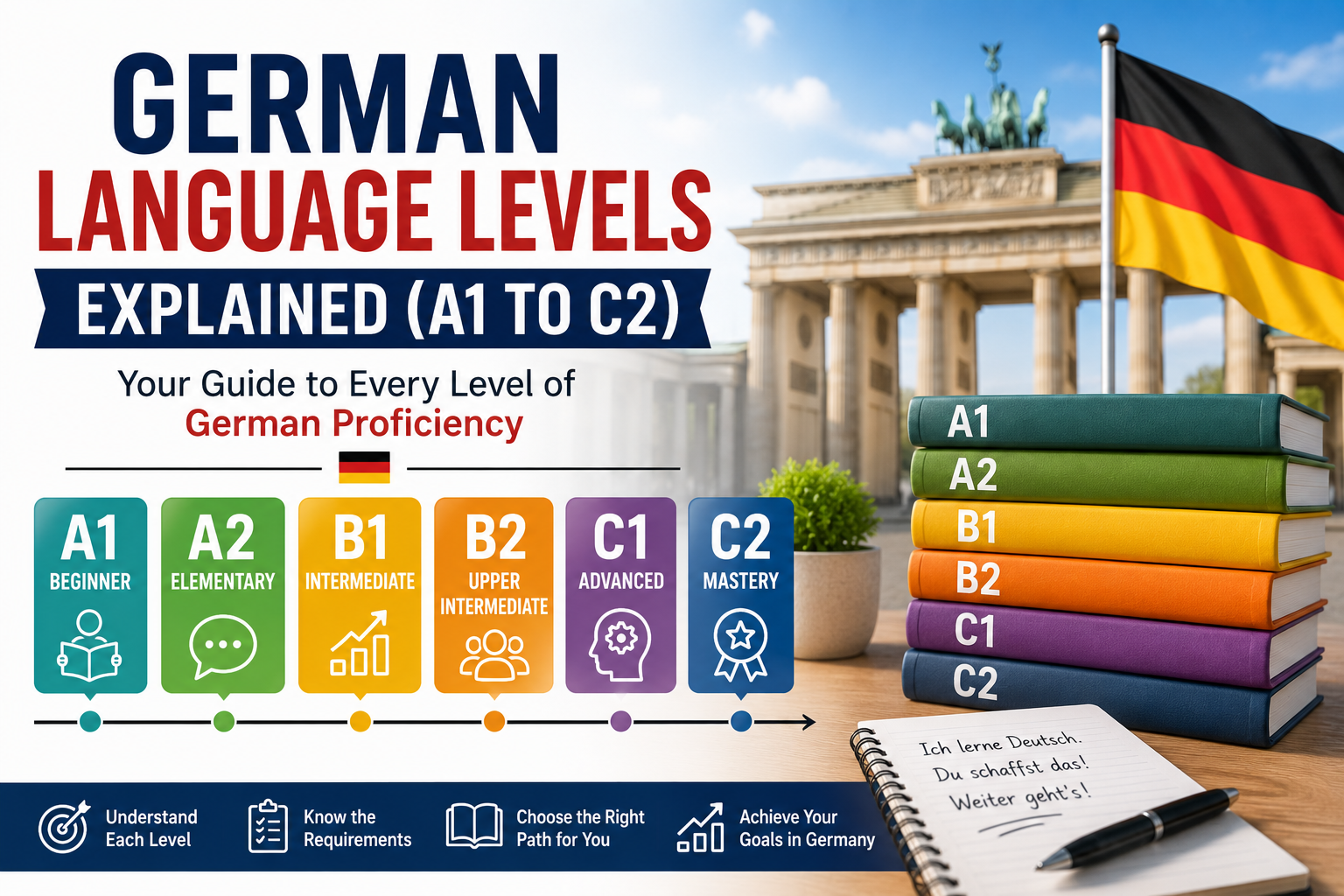
Planning to study, work, or settle in Germany? One of the first things you’ll come across is the German language proficiency levels, commonly referred to as A1, A2, B1, B2, C1, and C2.
These levels are based on the Common European Framework of Reference for Languages (CEFR) and are accepted by universities, employers, and immigration authorities across Germany and Europe.
Whether you’re applying for a German student visa, nursing job, Ausbildung, or Permanent Residency (PR), understanding these levels will help you choose the right language course and certification.
In this guide, you’ll learn:
- German language levels from A1 to C2
- What each level means
- Which level is required for study, jobs, nursing, and PR
- Popular German language exams
- How long it takes to reach each level
German Language Levels (A1 to C2)
The German language is divided into six proficiency levels.
| Level | Description | Suitable For |
|---|---|---|
| A1 | Beginner | Basic conversations, Student Visa |
| A2 | Elementary | Daily communication |
| B1 | Intermediate | Ausbildung, Daily Life in Germany |
| B2 | Upper Intermediate | Universities, Professional Jobs |
| C1 | Advanced | Highly Skilled Jobs, Higher Education |
| C2 | Near Native | Academic & Professional Expertise |
What are German Language Levels?
German language proficiency follows the Common European Framework of Reference for Languages (CEFR).
The CEFR is an internationally recognized standard used by:
- German Universities
- Employers
- Goethe-Institut
- TELC
- TestDaF
- Immigration Authorities
Your language certificate demonstrates your ability to understand, speak, read, and write German.
German Language Levels Explained
A1 – Beginner Level
A1 is the starting point for anyone learning German.
At this level, you can:
- Introduce yourself
- Ask and answer simple questions
- Understand basic phrases
- Communicate in everyday situations
Suitable For
- Absolute beginners
- Basic travel
- Family reunification visas
- Students starting German classes
A2 – Elementary Level
A2 builds upon basic communication skills.
At this stage, you can:
- Hold short conversations
- Understand frequently used expressions
- Talk about work, family, shopping, and daily activities
Suitable For
- Everyday communication
- Entry-level employment
- Students preparing for higher levels
B1 – Intermediate Level
B1 is one of the most important German language levels.
You can:
- Handle most daily situations independently
- Understand newspapers and simple articles
- Describe experiences and future plans
- Communicate confidently in routine situations
Suitable For
- Ausbildung in Germany
- Job seekers
- Daily life in Germany
- Some visa pathways
Many vocational training programs in Germany prefer candidates with B1 German proficiency.
B2 – Upper Intermediate Level
B2 is considered the professional working level.
At this stage, you can:
- Participate in professional discussions
- Understand complex texts
- Communicate fluently with native speakers
- Write reports and presentations
Suitable For
- German universities
- Nursing jobs
- Engineering jobs
- IT professionals
- Business careers
Many universities teaching in German require B2 proficiency.
C1 – Advanced Level
C1 demonstrates advanced fluency.
You can:
- Understand academic texts
- Express ideas naturally
- Write research papers
- Participate in professional meetings
Suitable For
- Master’s programs
- Medical professionals
- Lawyers
- Teachers
- Researchers
Many postgraduate courses taught in German require C1 certification.
C2 – Proficiency Level
C2 is the highest level of German proficiency.
At this stage, you can:
- Understand virtually everything you hear or read
- Communicate like a native speaker
- Work in highly specialized professions
- Write academic and professional documents effortlessly
Suitable For
- Professors
- Researchers
- Translators
- Senior corporate roles
- Government positions
German Language Levels Comparison
| Level | Speaking Ability | Typical Use |
|---|---|---|
| A1 | Basic greetings | Beginners |
| A2 | Daily conversations | Travel & Everyday Life |
| B1 | Independent communication | Ausbildung & Entry-Level Jobs |
| B2 | Professional communication | University & Skilled Jobs |
| C1 | Academic & Workplace Fluency | Higher Education & Professional Careers |
| C2 | Near-native fluency | Advanced Careers & Research |
Which German Level is Required for Different Goals?
| Goal | Recommended Level |
|---|---|
| Study in Germany (English Programs) | A1–A2 (optional for daily life) |
| Study in Germany (German Programs) | B2–C1 |
| Nursing Jobs | B2 |
| Ausbildung | B1–B2 |
| Engineering Jobs | B2 |
| Germany Opportunity Card | A1 or higher (additional points may apply) |
| Permanent Residency | B1 (depending on the pathway) |
| Citizenship | B1 or higher (subject to current regulations) |
How Long Does It Take to Learn German?
Learning speed depends on consistency, prior language experience, and practice.
| Level | Approximate Duration |
|---|---|
| A1 | 2–3 Months |
| A2 | 2–3 Months |
| B1 | 3–4 Months |
| B2 | 4–6 Months |
| C1 | 6–8 Months |
| C2 | 8–12+ Months |
Students attending regular classes and practicing daily often progress faster.
Which German Language Exam Should You Take?
Several internationally recognized exams assess German proficiency.
| Exam | Best For |
|---|---|
| Goethe-Zertifikat | Study, Work & Immigration |
| TELC | Employment & Visa Applications |
| TestDaF | German Universities |
| DSH | University Admission |
| ÖSD | Austria & Germany |
The right exam depends on your academic or career goals.
Is German Mandatory to Study in Germany?
It depends on the course.
- English-taught programs often do not require German proficiency for admission, though learning German is highly beneficial for daily life and part-time work.
- German-taught programs usually require B2 or C1 certification.
Benefits of Learning German
Learning German can open doors to:
- Better university options
- More scholarship opportunities
- Higher-paying jobs
- Easier integration into German society
- Better career growth
- Improved chances for long-term settlement
Common Mistakes Students Make
- Starting language preparation too late
- Choosing the wrong certification exam
- Ignoring speaking practice
- Underestimating the importance of German for jobs